Big Step: NASA’s Mars Rover Drives Itself Using AI for the First Time
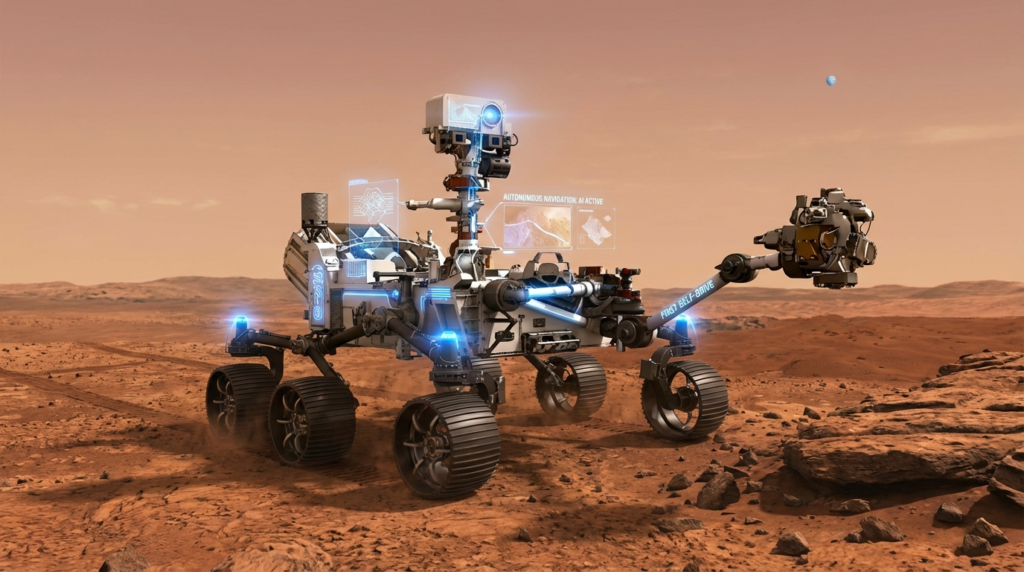
NASA’s Perseverance rover on Mars just did something amazing. For the first time, it drove itself using artificial intelligence, or AI, to plan its path. This is a huge step forward for exploring other planets. It means our rovers can now move around more easily and quickly without constant help from Earth. This new way of driving helps NASA learn more about Mars, faster than before.
What Happened on Mars?
In December 2025, the Perseverance rover made history. It completed its first drives on Mars where an AI system decided the best route. On one day, it drove about 689 feet (210 meters), and just two days later, it drove another 807 feet (246 meters). These drives were special because no human at NASA manually picked every step of the way. The AI did the planning.
How Does AI Help the Rover Drive?
Normally, a team of human experts at NASA’s Jet Propulsion Laboratory plans every move the rover makes. They look at pictures and data from Mars and decide a safe path. This takes a lot of time and effort because signals take many minutes to travel between Earth and Mars.
Now, a special type of AI, using advanced vision and language models, takes on this job.
• The AI looks at the same pictures and information that human planners use.
• It then figures out “waypoints” – these are like important stopping points or turns along a safe path.
• The rover then follows these AI-generated waypoints to move across the Martian ground.
• This lets Perseverance safely go over tough areas without needing constant human input.
Why Is This a Big Deal for Space Travel?
Using AI for driving is a game-changer for several reasons:
• Faster Exploration: Human planners on Earth have to deal with delays in communication with Mars. AI on the rover can react much faster to what it sees. This means the rover can cover more ground in less time.
• Greater Safety: AI can quickly spot dangers like big rocks or steep slopes and find a safer way around them. This helps protect the expensive rover.
• Exploring Further: As we send rovers to planets even farther away, like Jupiter’s moons, the communication delays will be even longer. AI will be vital for these missions to work on their own.
• More Science: With less time spent on planning drives, the rover can spend more time doing important science, like collecting samples or studying rocks.
NASA sees this as a careful and responsible way to use new technology. It shows how much we’ve grown in our ability to explore other worlds.
What is the Perseverance Rover Doing on Mars?
The Perseverance rover, which is about the size of a car, landed on Mars in 2021. It carries seven science tools and has been busy ever since. Its main jobs include:
• Studying the rocks and ground of Mars (geology).
• Looking at the air and weather on Mars (atmosphere).
• Collecting pieces of Mars rock and soil. These samples will be brought back to Earth in the future for scientists to study up close.
By using AI to drive, Perseverance can carry out these important tasks even better, helping us learn more about the Red Planet.
